Hydrodynamic Strongly-Coupled Quark Gluon Plasma Simulations
Due to my interest in high-energy physics and theoretical techniques, I have pursued an honours thesis in high-energy nuclear theory with Prof. Sangyong Jeon, where I worked on hydrodynamic simulations of quark-gluon plasma. Becoming familiar with creative applications of computational methods to perform accurate simulations of physical phenomena, enabled me to become aware of new techniques to design experiments that I now seek to apply in condensed matter physics.
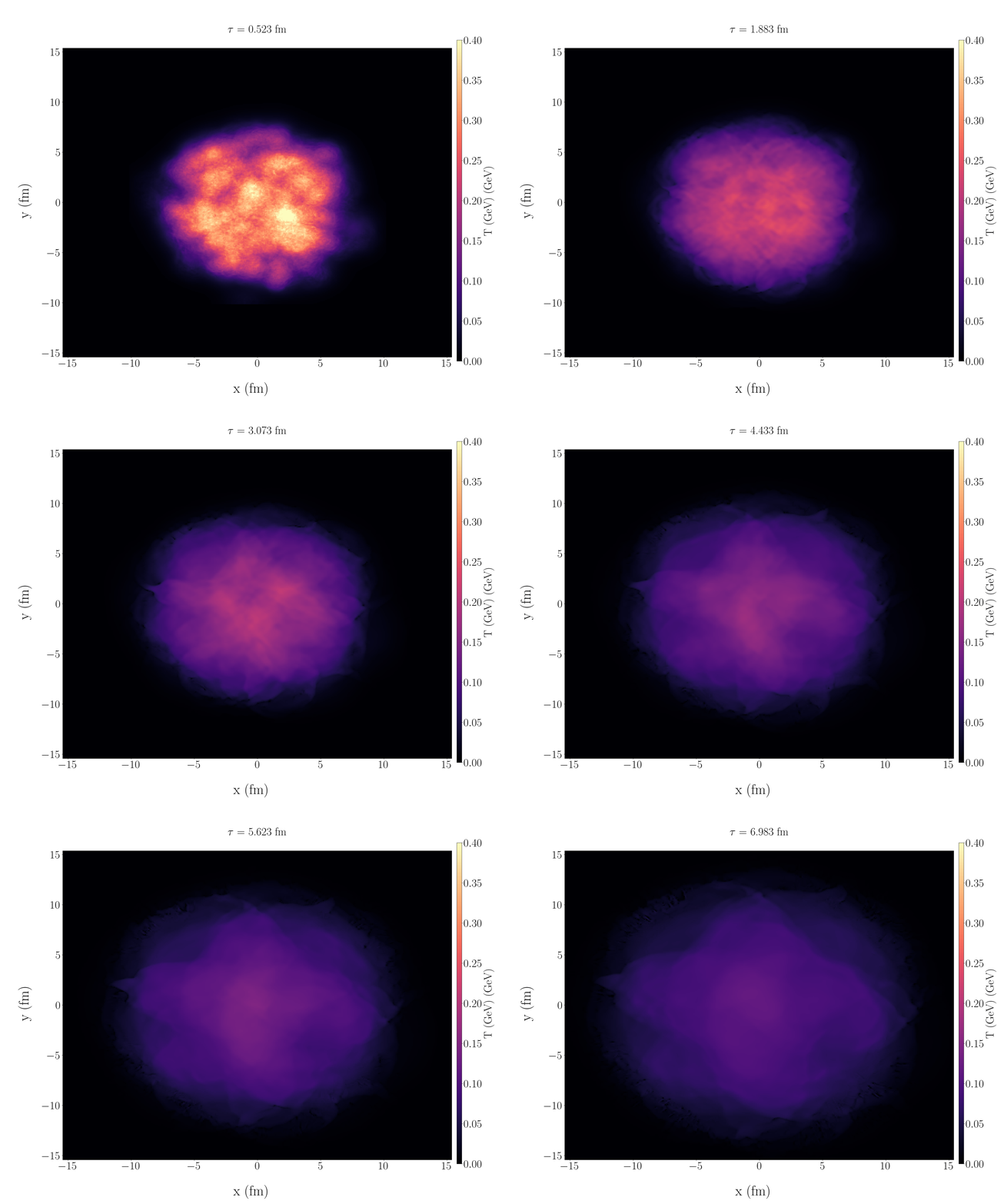
Quark gluon plasma is a state of matter where quarks and gluons become deconfined at high energies and are allowed to move freely. A full simulation of a quark gluon plasma evolution is shown below!
The aim of the thesis was to perform a study of numerical instabilities occuring in quark gluon plasma simulations for heavy-ion collisions, being able to discover the root cause is attributed to unphysically large gradients in regions of low density. I had the priviledge to be able to become familiar with various techniques in high-energy theory and phenomenology, and I found a great amount of joy in being able to study papers to learn new ways to simulate physical phenomena, discovering a passion for building and studying theoretical models in close proximity to experiment. If you wish to learn more about this project, see below for my Undergraduate Honours Thesis!